COURTESY : www.laborelec.com
Green tidal energy
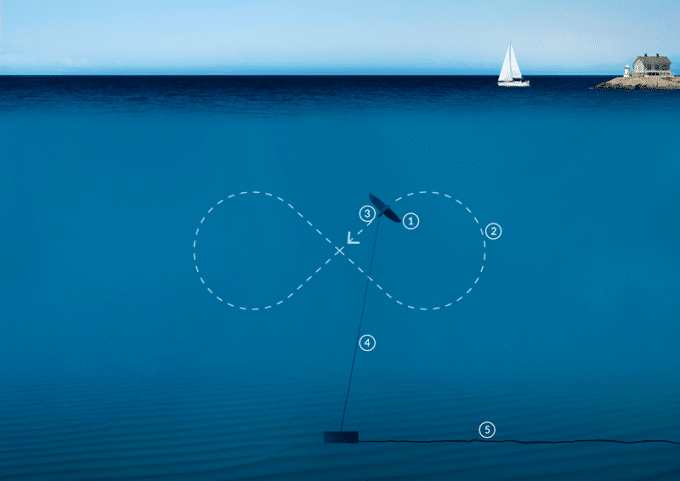
Deep Green tidal energy involves sweeping a turbine across a large underwater area, producing electricity from slow tidal and ocean currents. A full-scale PTO system is being developed and tested at an ERDF-funded commercial-scale Deep Green prototype, using state-of-the-art expertise in turbine and electrical systems design as well as advanced systems simulations.
The PTO system is optimized to reduce costs and increase competitiveness as well as to minimize the potential environmental impact.
Value
Deep Green is the only known technology that cost-effectively can produce electricity from underwater streams flowing slower than 2.5 m/s. The technology therefore promises disclosing a large and previously untapped source of renewable energy.
The role of ENGIE Laborelec
ENGIE Laborelec provides expertise on power grid requirements and power grid integration, contributing to the tidal array power system design.