


Courtesy : www.iea.org
Energy efficiency in india
Due to the growth of the Indian economy, energy use has continued to increase. Structural factors such as movement towards more energy-intensive transport modes, increased appliance ownership and building floor areas have added to increased energy use between 2010 and 2018. Fortunately, energy efficiency improvements in India since 2010 prevented 12% of additional energy use in 2018.
Improvements in energy efficiency
Decomposition of energy use in India between 2010-2014 and 2014-2018
Between 2014 and 2018, efficiency gains were mainly achieved in the industrial sector. These gains were more than five times the efficiency gains in transport and buildings over the same period.
Savings from energy efficiency in India, 2014-2018
- Industry
- Transport
- Buildings
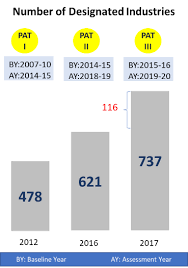
In 2018, 24.5% of India’s total energy use was covered by mandatory energy efficiency policies. The main contributor being the Perform, Achieve and Trade (PAT) scheme, the key policy driving efficiency gains in the industrial sector.
Percentage of energy use covered by mandatory energy efficiency policies in India, 2010-2018
- 2010 (India)
- 2018 (India
- 2010 (Global)
- 2018 (Global)
The adoption of appliance standards and building codes in some states, coupled with growing energy access and new construction, resulted in policy coverage in the buildings sector of 13% in 2018.
In the transport sector, the implementation of passenger car and heavy-duty vehicle standards increased the policy coverage to 6% in 2018. Ambitious plans have also been developed to increase the penetration of electric vehicles.
Under the Efficient World Scenario, the increase in energy demand could be limited to just 82% between now and 2040, as opposed to more than doubling in the NPS. This would avoid 10 EJ of additional energy use. Savings would mainly come from industry (45%) and buildings (30%), followed by the transport sector.
Energy efficiency opportunities
Energy savings by sector in India in the Efficient World Scenario vs the New Policies Scenario, 2012-2040
- Industry
- Buildings
- Transport
- New Policies Scenario
- Efficient World Scenario
Emissions saved under the EWS compared to the NPS would amount to 985 Mt CO2-eq, more than the emissions of Australia and Canada combined.
Avoided CO2 emissions in India in the Efficient World Scenario vs the New Policies Scenario, 2012-2040
- New Policies Scenario
- Efficient World Scenario
- Historical
The opportunities to increase energy efficiency based on the Efficient World Scenario are:
- In industry, the PAT scheme is currently the key policy to drive efficiency gains. It has been extended to a 4th cycle, increasing coverage of industrial energy use. Further expansion of PAT to less energy-intensive sectors paves the way for obtaining the largest energy saving potential, which has been identified in the EWS to be in the less intensive industry sectors. Electric motor-driven systems could also make an important contribution to efficiency gains. India has recently implemented minimum energy performance standards for electric motors at the IE2 level. Making them mandatory is likely to increase the effectiveness of these measures.
- In buildings, rising demand for space cooling will greatly increase energy use in India’s buildings sector. In the EWS, space cooling energy demand could more than quadruple to 2040 as living standards improve and purchasing power rises. The Bureau of Energy Efficiency (BEE) has revised the Energy Conservation Building Code for commercial buildings, launched the EcoNiwas Samhita code for the building envelope of residential buildings, and further expanded its standards and labelling programme starting with stronger MEPS for air conditioners.
- In transport, the adoption of electric vehicles will allow India to unlock additional efficiency gains beyond the savings it will get from its recently introduced fuel economy standards for light-duty and heavy-duty vehicles
The E4 programme has been working on several cross-sectoral initiatives involving country-wide analytical reports, capacity building, and data collection methodologies. It contributed to the Energy Efficiency Outlook for India in 2017 and the first IEA Review of Energy Policies in India, developed institutional relationships with the Bureau of Energy Efficiency (BEE) to provide policy guidance and help align energy efficiency indicators with IEA standards, and conducted India-wide energy efficiency policy training and capacity building.
In buildings, the E4 programme provided analytical support to the National Cooling Action Plan (NCAP) using IEA’s Future of Cooling analysis and through convening key stakeholders. E4 also worked with Indian stakeholders to develop case studies such as the Ujala Story – Energy Efficient Prosperity, to highlight the multiple benefits of the successful UJALA lighting scheme, thereby increasing the profile of the scheme.
In transport, the E4 programme supported the development of India’s Heavy Duty Vehicle standards through convening workshops with peer countries. It also supported the capacity building and analysis for the deployment of electric vehicles in India, through international workshops with other members of the IEA family.